Rooftop solar must accelerate


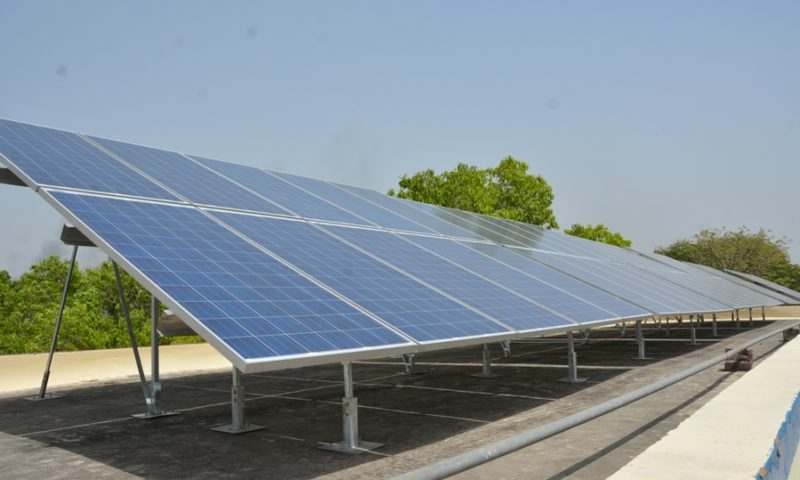
India has pledged to have 100 GW of grid-connected solar power capacity by December 31, 2022. Out of this, 60 GW is to come from ground-mounted solar plants while 40 GW is envisaged to come from rooftop solar (RTS). According to reliable estimates, India’s total solar capacity stood at 33.8 GW as of September 30, 2019. The worrisome issue is that the performance of RTS is belying even the most conservative expectations. The total quantum of RTS installations is today barely 4 GW, which is just about 10 per cent of the 2022-target.

Renewable energy needs attention on T&D front


The Union power minister has reportedly cautioned seven states—Karnataka, Maharashtra, Andhra Pradesh, Telangana, Madhya Pradesh, Rajasthan and Tamil Nadu—that renewable energy developers could drag discoms of these states to the National Company Law Tribunal (NCLT) over the non-payment of dues. It is learnt that these seven states together owe around Rs.5,300 crore to RE developers, and that the total outstanding of RE developers, pan India, is around Rs.8,200 crore.

A big step in power distribution reforms

This move is very significant as it marks the entry of the Central government in power distribution—an area that has traditionally been handled by state governments.

On June 21, 2019, the foundation for what could be a defining phase for the country’s power distribution sector was laid. Two Central government companies—NTPC and Power Grid Corporation of India—signed an MoU to form an equal joint venture “National Electricity Distribution Company Ltd.” that would undertake the business of power distribution on a pan-India basis.

This move is very significant as it marks the entry of the Central government in power distribution—an area that has traditionally been handled by state governments, and in a limited way, by the private sector. Power is a part of the Concurrent List, which is to say is it part of both the Union and the State List. In other words, it is a subject that is handled by both Central and state government entities.

The Central government has for long been in the power generation sector with mega entities like NTPC, NHPC, Nuclear Power Corporation, etc. The Central government entered power transmission in 1989 through Power Grid Corporation of India, which took over all the power transmission-related assets of Central PSU power generators, especially NTPC and NHPC.

The Central government’s decision to get into power distribution stems from the fact that most state government utilities have just not been able to manage the situation. Power distribution is responsible for the unbridled losses of state discoms. Several Central governments have tried to resuscitate state discoms through bailout packages (seen in the UPA regime) or through schemes like UDAY (NDA regime). However, there has been no positive transformation on the operational aspect of state discoms. They continue to be in losses. It is estimated that in FY19, aggregate losses of discoms grew by over 40 per cent, year-on-year, to reach Rs.21,658 crore.

One more pending reform is the separation of “carriage” and “content”. Power distribution is today considered as a single activity. With the proposed separation, which will suitably incorporated in the Electricity Act, owning and maintenance of infrastructure (carriage) and supplying of electricity (content) will be regarded as two separate activities. There will also be a provision of having multiple service providers within the same area of service. This will bring in competition amongst different service providers. The proposed National Electricity Distribution Company Ltd will also be one such service provider. The “carriage-content” phenomenon is also referred to “wire” and “supply”.

Clearly, the entry of Central PSUs in power distribution is a welcome step. State government power distribution utilities have been provided ample opportunity to reform, but a true transformation has been elusive.

The author of this article, Venugopal Pillai, is Editor, T&D India, and may be reached on venugopal.pillai@tndindia.com. The views expressed here are personal.

The evolving role of power financing

Power Finance Corporation Ltd (PFC), a Central PSU and the leading public sector financing entity in the power sector, recently held a media conference in Mumbai to discuss the company’s performance in FY19.


While the main purpose of the event was to analyze the PFC’s financial performance, which incidentally was much better than what was widely expected, it also gave a glimpse of PFC’s future plans. It has become increasingly clear that PFC will be moving from its traditional avenues—largely financing conventional power generation plants—to newer areas. Modern ideologies like energy efficiency, low carbon footprint, etc is gradually getting imbibed into PFC’s financing culture.


Some of the new areas identified by PFC include smart cities, electric vehicle manufacturing, charging stations for e-vehicles, battery manufacturing for solar projects, mini and micro grids for distributed generation, energy efficient systems like co-generation, tri-generation (electricity, heat and cooling), CHP (combined heat and power), waste recovery systems, etc.

Energy efficiency, clean energy, lower carbon footprint, reduced use of natural resources like coal and even water, will influence PFC’s loan portfolio in the time to come.

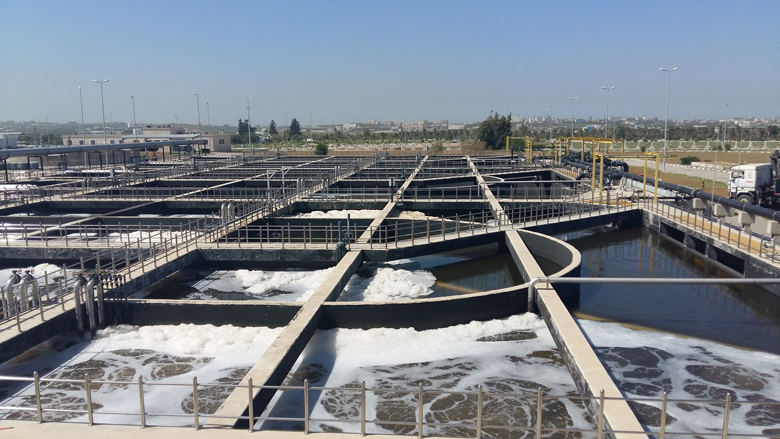
One interesting that came about at the media briefing was that PFC is financing a sewage treatment plant. Prima facie, it seemed very odd that PFC would be involved in such a seemingly unrelated activity. However, the story, as it unfolded, was very interesting. There is a sewage treatment plant (STP) that is being set up at Nagpur—a traditionally water-starved region in Maharashtra. The STP will treat sewage in the area and the water so obtained will be supplied to conventional coal-fired power plants in the region. Thermal power plants—those that use heat to generate electricity—need plenty of water, for generation of steam that is in turn used to rotate the turbines. The equipment used to boil water to create steam is known as the steam turbine generator (STG) or simply boiler, while the turbine-generator (TG) is the place where the mechanical energy obtained by the rotation of turbines is converted into electrical energy.


This STP will create a supply of good water from wastewater, thus obviating the use of fresh water by the power generation plants. In doing so, it will conserve the supply of fresh water, and effectively, augment the availability of water for residential use. PFC is involved in this project due to the “power generation” connection.


The use of treated water from STPs for power generation is a novel idea that is born from the need to conserve water in deficient regions. In India, there are also instances where STPs are used gainfully to generate electricity. STPs generate methane—a greenhouse gas– that is used to generate electricity, through the combustion route.


PFC’s diversification into micro grids, e-vehicles, batteries for solar projects, etc. represent a new financing culture. Clearly, energy efficiency, clean energy, lower carbon footprint, reduced use of natural resources like coal and even water, will influence PFC’s loan portfolio in the time to come.


The author of this article, Venugopal Pillai, is Editor, T&D India, and may be reached on venugopal.pillai@tndindia.com. The views expressed here are personal.

Private utilities give energy storage the initial push

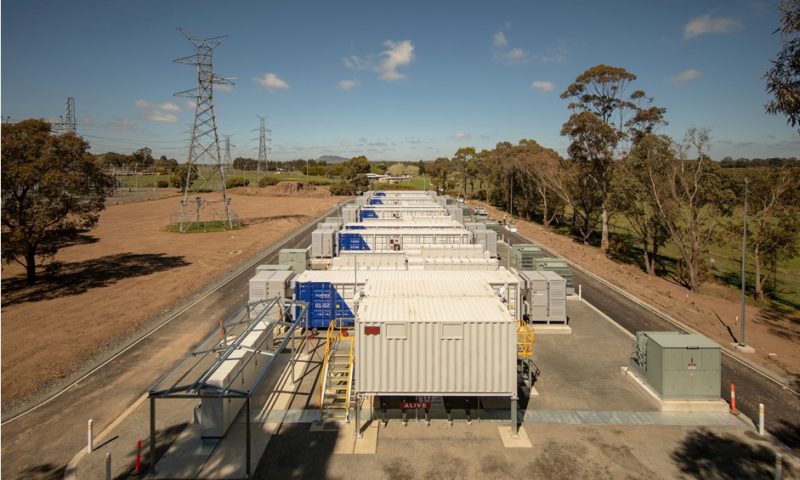
Energy storage, a relatively new subject on India’s power T&D landscape, was provided initial momentum with two private power distribution licencees establishing pilot projects.  In independent developments, Tata Power and BSES (representing the two discoms managed by Reliance Infra) announced that they had put up energy storage projects in their command areas, on pilot basis.

Maharashtra makes progress on DF front

Maharashtra State Electricity Distribution Company Ltd (MSEDCL) has appointed input-based distribution franchisees for two circles – Malegaon and Shil, Mumbra & Kalwa.

The Malegaon mandate has been clinched by CESC Ltd, an RP-Sanjiv Goenka company. In a stock exchange communication, CESC said that it has received a letter of intent from MSEDCL declaring it the successful bidder for the Malegaon Municipal Corporation area under the Malegaon circle.

In an independent announcement, Torrent Power said that it has emerged winner as the input-based distribution franchisee for the Shil, Mumbra & Kalwa sub-divisions under the Thane Urban Circle.

In both the cases, the tenure of the appointment will be 20 years.

The Shil, Mumbra & Kalwa sub-divisions have a consumer base of 2.15 lakh. In FY17, considered as the base year, the ATC losses for the given region were estimated at 47 per cent. The quantum of electricity supplied was 677 million kwh while net sales were only 376 million kwh.

It may be mentioned that in January 2007, Torrent Power was appointed DF for the loss-making Bhiwandi circle. This represented Maharashtra’s first experiment with private sector participation in the power distribution sector. Following the impressive turnaround staged by Torrent in Bhiwandi, the the ten-year contract was extended for another ten years, up to January 2027.

For CESC, this is first distribution franchisee mandate in Maharashtra. It may be recalled that towards the end of fiscal year 2012-13, CESC did win the DF mandate for the Ranchi circle in Jharkhand. However, this agreement was cancelled sometime in 2015, as were the mandates for the Jamshedpur circle that had gone to Tata Power. CESC made it big on the DF landscape by winning three DF appointments in Rajasthan—Bikaner, Kota and Bharatpur—during 2016 and 2017 It may be mentioned that CESC is also the distribution licencee — not franchisee — in Kolkata and Noida.

For Maharashtra, the appointment of the two DFs is a major comeback after some untoward experience with the Jalgaon and Aurangabad circles where the appointment of DFs had to be cancelled.

According to information compiled from various sources, the DFs currently active in India include CESC (three aforementioned circles in Rajasthan), Essel Utilities (Nagpur in Maharashtra and Muzaffarpur in Bihar), Torrent Power (Bhiwandi in Maharashtra and Agra in Uttar Pradesh), India Power Corporation (Gaya in Bihar) and SPML Infra (Bhagalpur in Bihar). [This list represents power distribution franchisees and not licencees.]


The author of this article, Venugopal Pillai, is Editor, T&D India, may be reached on venugopal.pillai@tndindia.com. The views expressed here are personal.

PGCIL debuts in intrastate power transmission

Earlier this month, Power Grid Corporation of India (PGCIL) debuted in the intrastate power transmission space by winning a concession in Uttar Pradesh, under the tariff-based competitive bidding route. The Central utility clinched the transmission scheme associated with the upcoming 2×660-mw Jawaharpur power generation project in Uttar Pradesh.

For PGCIL, which specializes in interregional and even cross-border transmission lines, winning an intrastate project assumes significance. When the TBCB mechanism was launched in January 2011, the initial projects were all of interregional lines—crucial components of the National Grid. It is only in recent years that state governments started using the TBCB mechanism for intrastate lines. However, this culture did not spread widely with only few states like Uttar Pradesh, Haryana, Rajasthan and a few others, deciding to adopt this modality.

Coming back to the concession won by PGCIL, the project special purpose vehicle is “Jawaharpur Firozabad Transmission Ltd,” which was incorporated on August 20, 2018, as a wholly-owned subsidiary of REC Transmission Projects Company Ltd. This SPV has now been transferred to PGCILwho will develop the project on build, own, operate, maintain (BOOM) basis under a 35-year concession period.

The transmission scheme comprises of three broad elements:

  • LILO of the 765kV Mainpur-Greater Noida single-circuit line at Jawaharpur thermal power project
  • 400kV double-circuit quad line from Jawaharpur thermal power project to Firozabad
  • 400/220/132kV air insulated substation (AIS) substation at Firozabad


The project will also include some more LILOs and a 132kV double-circuit line connecting the upcoming Firozabad substation to Narkhi.

UP takes the lead: It is worth observing that Uttar Pradesh has formalized three intrastate power transmission projects this year. This is a very commendable achievement considering that there was hardly any movement in other states in the intrastate TBCB power transmission space.

Of the three projects that UP formalized this year, one project (the Jawaharpur scheme discussed above) has gone to PGCIL and two have been bagged by Adani Power. In June this year, Adani Transmission Ltd (ATL) clinched the Ghatampur power transmission project under the tariff-based competitive bidding route, marking its first presence in Uttar Pradesh.

The transmission project involves around 900 ckm of transmission lines at 765kV and 400kV levels. Some major 765kV lines include Ghatampur-Agra, Agra-Greater Noida and Ghatampur-Hapur.

Incidentally, the Ghatampur project saw very aggressive bidding at the RfP stage with PGCIL being the only other contender in the race when the project ultimately went to Adani Group.

Very recently, Adani won the transmission scheme involving evacuation infrastructure for the upcoming 2×660-mw Obra-C thermal power project of state government utility Uttar Pradesh Vidyut Utpadan Nigam Ltd (UPVUNL).

Uttar Pradesh is seen to be very aggressive in recent years, in all aspects of the power value chain—generation, transmission and distribution. The northern state is gearing up to meet growing demand from both the industrial and household sector. Under the nationwide household electrification scheme “Saubhagya”, over 68 lakh households have been electrified since October 2017. This represents nearly 30 per cent of the 231 lakh households that have been electrified since the launch of Saubhagya.

UP is doing well to expedite its power generation projects and also step up household electrification. Its effort in accelerating the creating of power transmission infrastructure is a step in the right direction.

The author of this article, Venugopal Pillai, is Editor, T&D India, may be reached on venugopal.pillai@tndindia.com. The views expressed here are personal.