Tata Power’s presence could boost DF model

Tata Power Company’s recent appointment as the distribution franchisee for the Ajmer circle in Rajasthan could do well for the languishing DF model.

On April 21, 2017, Tata Power Company announced that it has signed the distribution franchisee agreement with Ajmer Vidyut Vitaran Nigam Ltd for power distribution in designated areas of Ajmer city in Rajasthan. This development is significant on several counts.

For Rajasthan, this represents furtherance in its endeavour of privatizing power distribution under the DF model. Ajmer represents the fourth city after Kota, Bharatpur and Bikaner to come under the distribution franchisee ambit.

For Tata Power, amongst the oldest power utilities in India, it is another attempt at experimenting with the DF model. The utility in late 2012 was appointed as distribution franchisee for the Jamshedpur circle in Jharkhand but the agreement was called off in 2015. However, this development follows the state government’s decision to work on the DF model afresh and cancel all previous agreements. Accordingly, the DF agreement with CESC for the Ranchi circle was also annulled. Incidentally, Jharkhand had initiated the process of inviting DFs for seven circles (including Ranchi and Jamshedpur) but elicited poor responses from bidders.

Tata Power has done a wonderful job in making power distribution a profitable business in Delhi. However, Tata Power’s involvement in Delhi is through the licensing model. It has formed a joint venture Tata Power Delhi Distribution Ltd, in which the Government of NCT of Delhi is also a stakeholder. The Delhi government, for that matter, is also a stakeholder in the other two private power utilities BSES Yamuna Power and BSES Rajdhani Power, in which the private party is Reliance Infrastructure (Anil Ambani Group).

Under the licensing model, the private entity (licensee) undertakes capital expenditure in improving the distribution grid. It is therefore an asset-heavy model. The DF model is a relatively asset-light model where the primary focus is on improving the commercial efficiency of the designated area through enhanced recovery of dues from customers.

The distribution franchisee model has generally not been successful. Since there aren’t too many successful precedents, there are not many emulators as well. There are several cases where the DF model has failed—Aurangabad and Jalgaon in Maharashtra; Ujjain, Sagar and Gwalior in Madhya Pradesh; Ranchi and Jamshedpur in Jharkhand; and perhaps some more.

Also read: Making the distribution franchisee model work

As a seasoned power utility, Tata Power has tremendous experience in handling both the B2B and the B2C segments in the power value chain. It is therefore expected that Tata Power’s involvement in the Ajmer circle could bring much needed credibility and support to the power distribution franchisee model, per se. According to information available, Tata Power did bring about efficiency in Jamshedpur during its tenure as the distribution franchisee. However the appointment was cancelled more as government ideology rather than inadequate performance by the private franchisee.

First for Ajmer discom

Rajasthan has three power distribution companies—Ajmer, Jaipur and Jodhpur. For Ajmer Vidyut Vitaran Nigam Ltd (AVVNL), the Ajmer circle is the first instance of appointment of a distribution franchisee. AVVNL handles power distribution in 12 circles spread over eleven districts—Ajmer, Bhilwara, Nagaur, Sikar, Jhunjhunu, Udaipur, Banswara, Chittorgarh, Rajsamand, Doongarpur and Pratapgarh.

Ajmer district has two circles called “Ajmer City” and “Ajmer District”. The Ajmer City circle, in turn, has three divisions, out of which two (City Division-I and City Division-II) will be taken over by Tata Power.

IPPs dominate supercritical power capacity


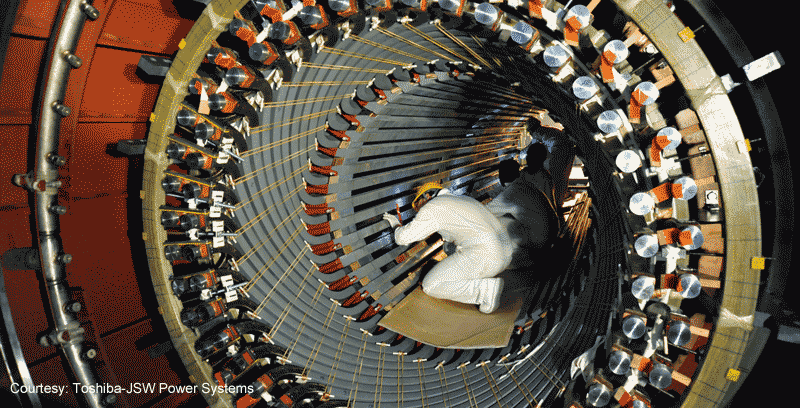
India’s supercritical power generation capacity crossed 38 GW as of December 31, 2016, according to statistics released by Central Electricity Authority. It is interesting to note that independent power producers (IPP) had the maximum share of this capacity. Nearly 75 per cent of this capacity, corresponding to 28,550 mw, was built by IPPs with government utilities having a very small share. Central PSUs—mainly NTPC—accounted for 12.4 per cent of this capacity while state government entities had a comparable share of around 13 per cent.

BHEL gets “developer” tag


Very recently, the first unit of the 2×800-mw Yeramarus supercritical power plant in Karnataka was commissioned. This development assumes significance on several counts. First, it imparts to public sector engineering firm Bharat Heavy Electricals Ltd (BHEL) the status of “power developer.” The Yeramarus plant is owned by Raichur Power Corporation Ltd – a joint venture between Karnataka Power Corporation Ltd (approximately equity stake: 50 per cent), BHEL (26 per cent) and IFCI Ltd (24 per cent). BHEL, after having supplied equipment to a very large share of India’s power generation capacity, is finally an owner, albeit part-owner, of a power plant.

Making the distribution franchisee model work


Early last month there was some good news on the power distribution front when private utility CESC Ltd (part of the RP-Sanjiv Goenka Group) was appointed the distribution franchisee for the Bikaner circle in Rajasthan. For the northern desert state, this was the third case of appointing a distribution franchisee. In July 2016, Rajasthan had appointed distribution franchisees for Kota and Bharatpur. Incidentally, both these mandates were won by CESC Ltd.

Solar parks could make up for rooftops


Very recently, the Cabinet Committee on Economic Affairs approved the doubling of envisaged capacity through solar parks and ultra mega solar power projects from 20 GW to 40 GW. The Centre has targeted at least 50 solar parks, each with capacity of at least 500 mw, to come up all over the country by FY20. Financial support from the Centre for this additional 20 GW of grid-connected solar capacity would be to the tune of Rs.8,100 crore. It may be recalled that 20 GW worth of Solsolar parks, 34 in number, are already under various stages of development. The original scheme of solar parks was launched in December 2014.

NTPC realizes coal dream, but with delay

National Thermal Power Corpn.


NTPC recently realized its cherished dream of producing coal from its own mines. The first rake carrying coal left the Pakri-Barwadih (PB) mine in Jharkhand for NTPC’s Barh thermal power project in Bihar, on February 16, 2017. However, it has been a very long journey for NTPC—13 years.

Tariff-based bidding: A game changer for wind energy


In early 2011, it became mandatory for all power procurement to be made through the tariff-based competitive bidding (TBCB) mechanism. The TBCB philosophy ensures that the procurer of power gets the best possible tariff. There is no distinction between public or private sector suppliers of power. While much efficiency has been achieved through the TBCB modality in conventional power, the positive impact of TBCB is now being felt in the renewable sector as well.

Consolidation in power transmission business


There appears to be some consolidation in the power transmission business with Adani Group’s recent signing of definitive agreements to acquire a large transmission asset of Anil Ambani-controlled Reliance Infrastructure (RInfra) in western India. Once acquired, Adani Group is poised to become the largest independent power transmission company owning and managing over 10,000 circuit km (ckm) of transmission lines.

100-per cent village electrification: Budget Announcement 2017


One of the announcements in the recent Budget speech of Union finance minister Arun Jaitley was that the government would achieve 100 per cent village electrification by May 1, 2018. Several industry captains have reacted positively to this announcement. Yes, village electrification is a highly noble objective but the term “100 per cent village electrification” must be understood clearly.

Separating CTU from Power Grid Corporation


For quite some time now, Power Grid Corporation of India, the Central PSU engaged in interregional power transmission, has been in the news with respect to separating itself from the “CTU”, which is “Central Transmission Utility.” It is worthwhile to understand the issue in some detail.

Something very significant had taken place on January 5, 2011. The power ministry ruled that all power purchases made after this date would be based on tariff-based competitive bidding (TBCB) mechanism. This has had serious bearing on all aspects of the power value chain—generation, transmission and distribution.

In the context of interregional and interstate power transmission, PGCIL was always the agency “nominated” by the power ministry. PGCIL could build power transmission lines on the “cost-plus” method, which meant that it could quote a project cost, factoring a mark-up on the envisaged construction cost. In other words, PGCIL was always assured of return on investment as the tariffs charged by PGCIL for transmission of power were based on the expenditure incurred on constructing the line.

Power Grid no longer nominated agency

Post January 5, 2011, PGCIL lost its status of being the “nominated agency” for building interregional and interstate lines. Under the TBCB regime, PGCIL would have to compete with private players and win projects based on the tariff quoted. It surely would have been a culture shock for PGCIL. The Central PSU now had to compete with the same private entities that used to be contractors for its projects. These private entities, in turn, were contractors that choose to groom into developers. In other words, a private contractor for PGCIL would now aspire to become an owner and manager of a transmission line—much more than simply building it for PGCIL. The TBCB regime, as one can see, marked the evolution of private enterprise in interregional power transmission. We have today private developers like Sterlite Power, Reliance (ADAG) Group, Kalpataru Power Transmission, etc—all of whom are sharing the power development space with PGCIL.

It is important to note that PGCIL along with being a power transmission company, in the sense of owning and managing interregional transmission lines, is also responsible for grid management and for planning the nationwide transmission infrastructure. For PGCIL to fit fairly into the TBCB regime, other aspects, namely the grid management, and the planning of transmission network, also had to be worked upon.

Grid management hived off, now it is CTU’s turn

Steps to reorganize PGCIL were taken much before the January 5, 2011. In February 2009, the grid management operations of PGCIL were hived into a separate company called Power Systems Operation Corporation Ltd (POSOCO). When incorporated, it was a wholly-owned subsidiary of PGCIL. The grid management operations of PGCIL, now under POSOCO, include one national load dispatch centre (NLDC), five regional load dispatch centres (RLDC) and 33 state load dispatch centres (SLDC). The incorporation of POSOCO was aimed at ring-fencing the grid management operations from PGCIL, though POSOCO’s ownership was still with PGCIL.

Very recently, an important development took place. On January 2, 2017, the ownership of POSOCO was transferred from PGCIL to the Union power ministry. The complete equity capital of POSOCO, comprising 30.64 million shares of face value Rs.10 each, was transferred to the power ministry for a consideration of Rs.81 crore. This now makes POSOCO a Central PSU, directly under power ministry. At the organizational level, POSOCO is now at par with PGCIL, as well as other Central PSUs under the power ministry. More importantly, POSOCO will have much more financial autonomy allowing it to even raise resources on its own.

With the grid management issue now taken completely care of, it is time to look at the CTU dimension. Among the various functions of the CTU is that of planning the national transmission network, which essentially means new interregional and interstate transmission systems. The paramount corporate objective of PGCIL is to develop a national grid for the seamless transfer of electricity between the five regional grids—north, northeast, west, east and south. Currently, the interregional transfer capacity of the National Grid is around 62,650 mw, which is very close to the target of 65,000 mw set for end-March 2017, the end of the XII Plan period. It should be remembered that PGCIL does not own this 62,650 mw entirely. Around 10 per cent belongs to private developers, representing projects won by private entities under the TBCB regime.

Also read: The changing complexion of Power Grid Corporation of India

Why the CTU needs to be separated

The CTU is a small but highly specialized cell within PGCIL. It is reliably learnt that the CTU is a group of five or six members. The main job of the CTU is to plan new transmission schemes, to augment capacity of the National Grid. The CTU not only plans new lines, but it also estimates the project cost and other sensitive parameters like the base tariff, etc. All this information is critical whilst bidding out the project under the tariff-based competitive bidding mechanism. Technically, PGCIL has access to this information and this could vitiate the tenets of tariff-based competitive bidding. It threatens to destroy the level-playing field between PGCIL and private developers. This is why the CTU aspect of PGCIL needs to be detached from PGCIL. The power ministry is already working to this effect.

The case of PGCIL is reminiscent of several such instances where Central government undertakings had to be restructured in the wake of the Liberalisation Policy of 1991. One such case is that of the erstwhile Oil & Natural Gas Commission. Till the early part of the 1990s, ONGC was both an operator and a regulator of sorts. When private sector entered the oil exploration business, ONGC could not perform a dual role. Thus, in 1993, was born Oil & Natural Gas Corporation Ltd (a corporate entity under the petroleum ministry) and Directorate of Hydrocarbons (DGH)—the regulator.