
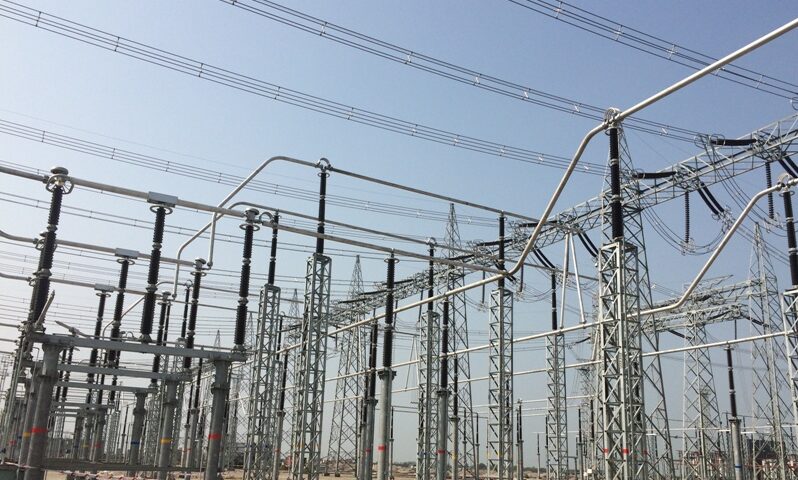
Very recently, bidders for an intrastate transmission system (InSTS) scheme in Maharashtra, to be developed under the tariff-based competitive bidding (TBCB) modality were shortlisted for opening of initial price bids.
The case in point is the InSTS-TBCB scheme housed under “Velgaon Power Transmission Ltd” for which REC Power Development & Consultancy Ltd (RECPDCL) is the bid process coordinator.
RECPDCL shortlisted seven bidders that included five private sector firms (out of which two were relatively new entrants), Power Grid Corporation of India Ltd (PGCIL) and, most importantly, Maharashtra State Electricity Transmission Company Ltd (MSETCL, the state government-owned transmission service provider of Maharashtra).
The presence of MSETCL as one of the bidders, prima facie, is perfectly in tune with the TBCB philosophy. If the TBCB framework were not deployed, MSETCL would have been the nominated agency and would develop this project under the regulated tariff mechanism (RTM) modality. Now that TBCB has been deployed, MSETCL has to “earn” the developmental rights through tariff-based bidding, alongside other contenders.
The very same phenomenon took place, long years ago, with PGCIL. When the TBCB philosophy was heralded somewhere in January 2011, PGCIL was no longer the de-facto agency for building interstate and interregional transmission infrastructure. It had to “win” the project through a scientific bidding process. Today, it is widely believed that the TBCB framework has resulted in lower tariffs, ultimately in the interest of the end consumer.
The point here is not about the TBCB process per se, it is more about the planning aspect. Planning of the ISTS network was done through the “Central Transmission Utility” or CTU, which was a small part of PGCIL, but a part nevertheless. It was alleged that PGCIL would be privy to sensitive information about the project as the planning agency – CTU – was part of PGCIL. This could influence PGCIL’s tariff bids and give it an unfair advantage over other bidders.
This apprehension was looked into by the government in all seriousness, and the result was the hiving off of the CTU operations of PGCIL into a separate entity Central Transmission Utility of India Ltd (CTUIL), which is today PGCIL’s subsidiary but leads an independent existence. It is likely that CTUIL, which came into existence in April 2021, would soon become an independent entity directly under the Union power ministry, much like Grid Controller of India Ltd (GRID-INDIA) that represent the grid management operations that were once performed by PGCIL. [Read related post]
The same apprehension about PGCIL and CTU may resurface with MSETCL’s bidding for the Velgaon transmission project, and for future projects that Maharashtra plans under the TBCB route. Planning of the intrastate grid is done through the “State Transmission Utility” or STU, which is legally still a part of MSETCL. The apprehension that MSETCL could have access to sensitive project details cannot be entirely refuted however much one would like to believe the independence of STU’s operations.
Incidentally, under a recent Maharashtra government policy, all new intrastate transmission schemes costing upwards of Rs.200 crore, with some exceptions, would see the deployment of the TBCB framework. Maharashtra currently has as many as ten schemes structured on the TBCB modality and for which bidding is already underway or expected to be initiated soon.
The presence of MSETCL in future TBCB schemes is therefore very likely, and steps to delink the STU with MSETCL are definitely warranted.
Under the TBCB framework, participation of state-government owned transmission companies is very much allowed, and in fact, must be encouraged. However, alienating the STU operations from the transmission service operations is critical.
It might be of interest to note that an ISTS-TBCB scheme “Udupi Kasargode Power Transmission Ltd” that was awarded (to Sterlite Power, now Resonia) in September 2019 had seen Kerala State Electricity Board (KSEB) as one of the technically qualified bidders.
State transmission companies participating in interstate schemes is perfectly alright as there is no element of bias. State entities have no association with CTUIL. Similarly, state transmission companies participating in intrastate schemes of other states is absolutely fair, though there are no known instances of this so far.
It is time that state governments, particularly those having financially and technically sound transmission companies, initiate the process of separating the STU aspect from the transmission service operation (TSO) dimension. This would create a true level-playing field between state transmission companies and private entities in bidding for intrastate schemes, designed on the TBCB philosophy.
As the power transmission development space matures, it will not be surprising to see crisscross participation of PGCIL and state transmission companies, in conjunction with private entities. PGCIL is today developing intrastate schemes under the TBCB framework in Madhya Pradesh and Uttar Pradesh, for instance. It is a matter of time before we see a state-government transmission service provider winning an interstate scheme, or an intrastate scheme of a different state.
The author of this article, Venugopal Pillai, is Editor, T&D India (www.tndindia.com), and may be reached on venugopal.pillai@tndindia.com. Views expressed here are personal, not necessarily supported by T&D India.